Reviews, Reputation & Trust
The 'Trust Stack' That Makes Strangers Pick Up the Phone and Call You
Strangers land on your site looking for reasons to trust you. This simple 5-layer trust stack gives them what they need to call — without you having to convince anyone.
·5 min read
When a stranger lands on your website, they're doing one thing: looking for reasons to trust you — fast.
They don't know you. They've probably been burned before by a contractor who didn't show, a service that overcharged, or a company that disappeared after the deposit. So they arrive a little skeptical, scanning for signals that tell them you're safe to call.
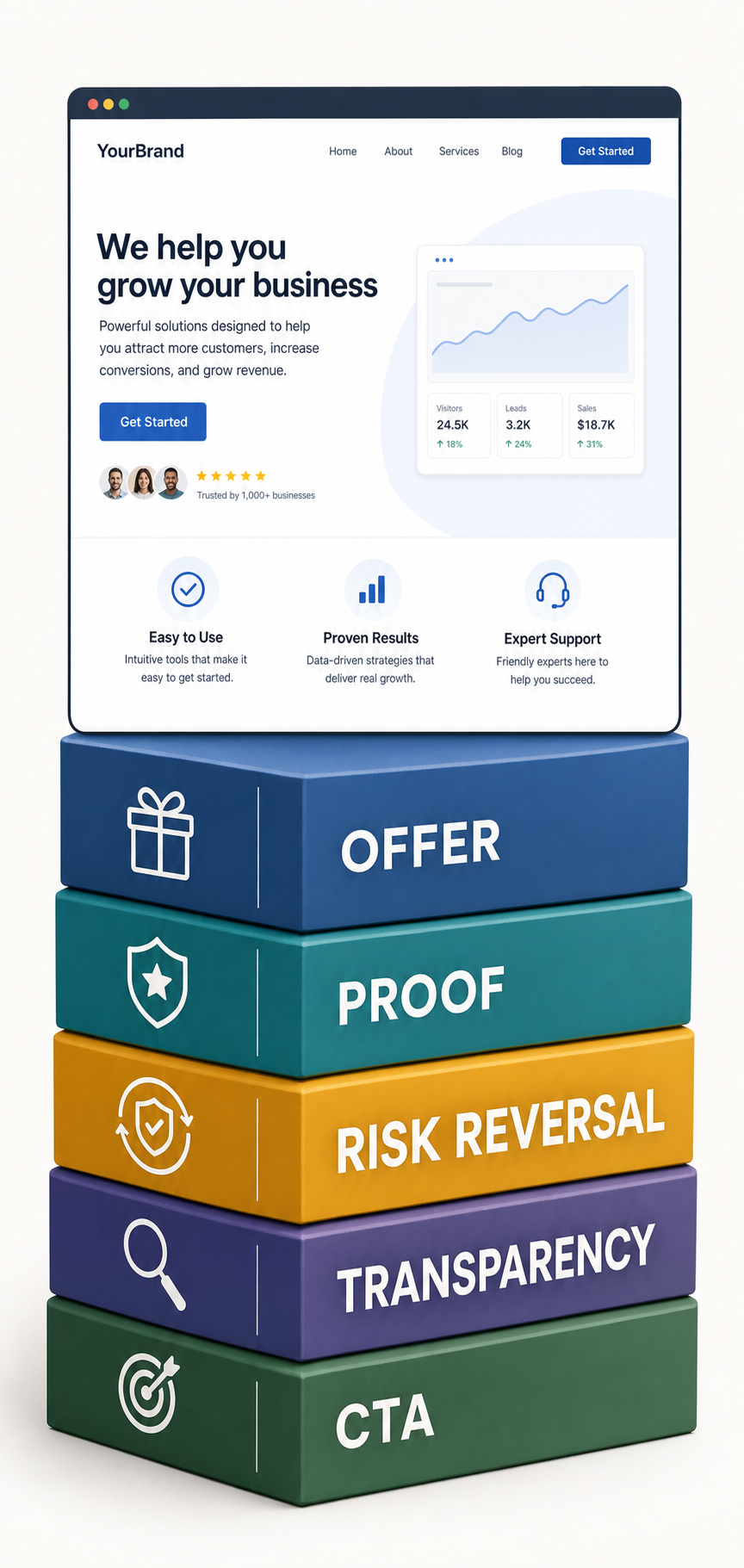
Here's the good news: you don't have to "convince" anyone. You just have to stack the right signals in the right order. I call it the trust stack — and when it's built right, calling you feels like the obvious, low-risk choice.
Why Trust Beats Persuasion
David Ogilvy famously said, "The consumer isn't a moron; she's your wife." His point still holds: treat people like the smart adults they are. Don't try to trick or pressure them into action — just give them what they genuinely need to feel confident deciding.
That's the whole philosophy behind the trust stack. Instead of hype, you provide clarity and proof. Instead of pressure, you remove risk. The decision gets easier on its own.
The 5 Layers of the Trust Stack
Build these in order, and each layer reinforces the one before it.
1. Clear Offer
The instant someone lands, they should know exactly what you do and who you do it for. No clever taglines that leave them guessing. A confused visitor never calls. Lead with a plain statement of your service and your area.
2. Proof
Now that they know what you offer, show them you actually deliver. This is where reviews, years of experience, before-and-after results, and recognizable logos do their work. Proof turns "sounds nice" into "okay, they're legit."
3. Risk Reversal
This is the layer most local businesses skip — and it's powerful. A guarantee, a warranty, or even a simple "no pressure, no obligation" promise takes the fear out of reaching out. When you shoulder the risk, the visitor doesn't have to.
4. Transparency
People fear the unknown more than the price. Sharing pricing ranges, walking through your process, and explaining what happens after they call removes the anxiety that quietly kills conversions. Transparency says: there are no surprises here.
5. Easy Action
Finally, make the next step effortless. A clickable phone number, a sticky call button, or a short form — not a 12-field interrogation. Every bit of friction here is a reason to leave. The easier you make it, the more people take the step.
How the Layers Work Together
Each layer answers a question running through the visitor's mind:
- Clear Offer → "Is this even what I need?"
- Proof → "Can I believe they're any good?"
- Risk Reversal → "What if it goes wrong?"
- Transparency → "What am I actually getting into?"
- Easy Action → "Okay — now what do I do?"
Answer all five, in order, and you've removed every reasonable objection between a stranger and a phone call. That's the entire job of a high-converting website.
Quick Takeaways
- Strangers arrive skeptical — your site's job is to give them reasons to trust, fast.
- The trust stack has five layers: Clear Offer, Proof, Risk Reversal, Transparency, Easy Action.
- Risk reversal (a guarantee or "no pressure" promise) is the layer most businesses skip.
- Transparency about price and process removes the fear that quietly kills conversions.
- Build trust in and you won't need to "convince" anyone — you just make it easy to say yes.
FAQ
What is a website "trust stack"?
It's a simple framework of five layers — Clear Offer, Proof, Risk Reversal, Transparency, and Easy Action — arranged in order on your website so a first-time visitor gathers everything they need to feel confident contacting you.
Which layer matters most?
They work as a system, but risk reversal is the one most local businesses overlook. A guarantee, warranty, or "no obligation" promise lowers the perceived risk of reaching out and often unlocks calls you were otherwise losing.
How do I add risk reversal without losing money?
It doesn't have to be a big-money guarantee. Often a simple, honest promise — a free no-obligation consultation, a satisfaction guarantee, or clear "no pressure" language — is enough to lower a visitor's defenses and make the first step feel safe.
Why does transparency increase conversions?
Uncertainty creates hesitation. When you share pricing ranges and clearly explain your process, you remove the fear of hidden costs and surprises. Visitors who understand what to expect are far more comfortable taking action.
Want a Website With Trust Built In?
If your site is getting visitors but not calls, there's a good chance one or more of these trust layers is missing. At Medic 1 Media, we build websites for local businesses with trust baked in from the first scroll — so you don't have to convince anyone. Get a free Google Business audit and we'll map your site against the trust stack, show you which layers are missing, and tell you exactly what to add.
Get My Free Google Business Audit