Local SEO & Google
The Map Pack Is a Goldmine — But Only If Your Website Backs It Up
The Google Map Pack is where local customers actually click. Here's why a weak website quietly drags down your your local area rankings — and how to fix it.
·5 min read
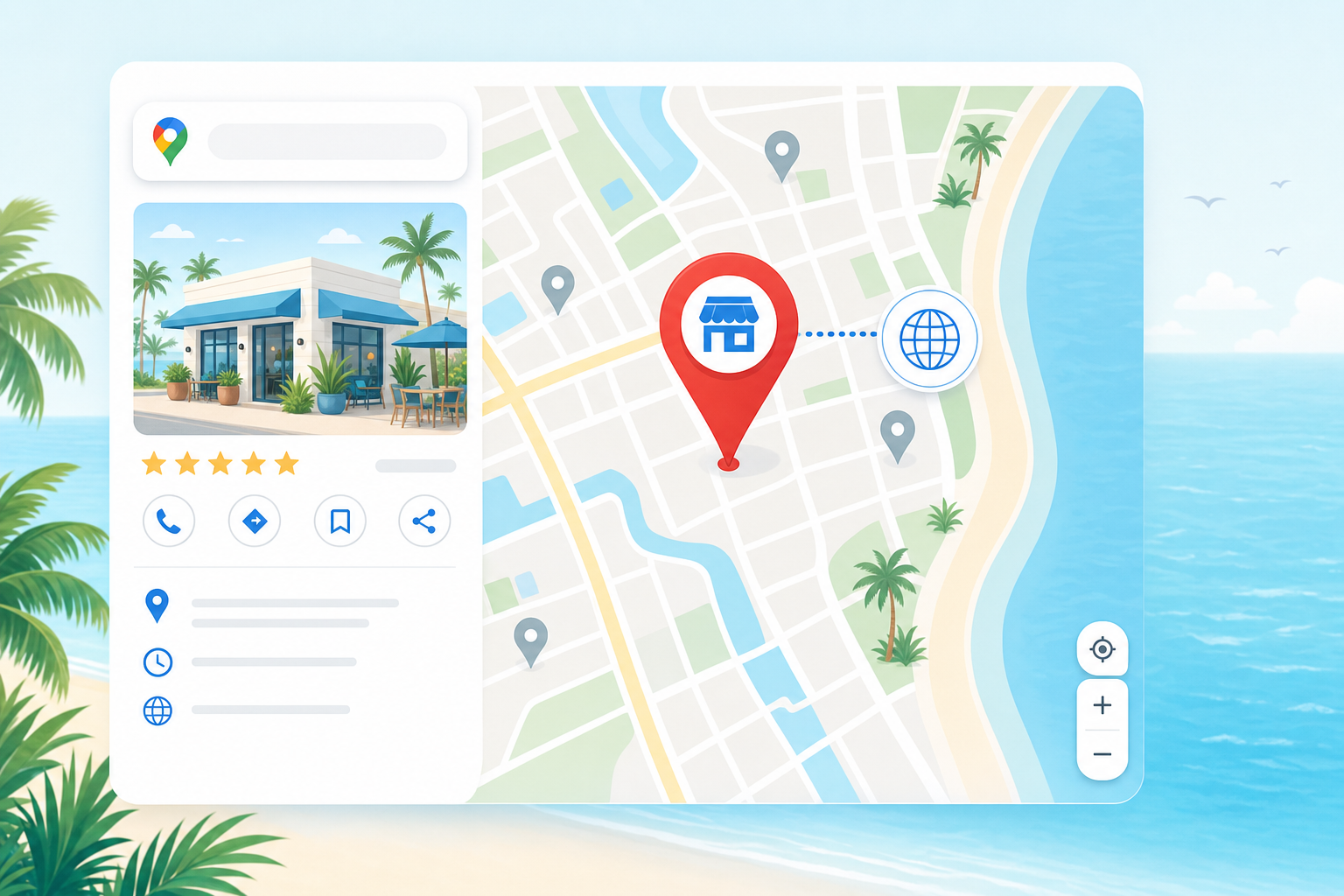
When someone in your area pulls out their phone and searches for a service you offer, they're not scrolling through ten blue links. Their eyes go straight to the map and the three businesses sitting right underneath it.
That's the Map Pack. And it's where a huge slice of local buying intent lives.
Here's the part most business owners miss: getting into that top three isn't only about your Google Business Profile. Your website is quietly voting for you — or against you — every single time Google decides who deserves the spot.
What the Map Pack Actually Is
The "Map Pack" (also called the local pack or 3-pack) is the block of three local business listings Google shows alongside a map at the top of local search results. It's prime real estate, because it appears above the regular organic results and it's built for people who are ready to act — call, get directions, or visit.
Google ranks local results based on relevance, distance, and prominence. Translation: how well you match the search, how close you are to the searcher, and how established and trusted your business looks across the web. Your website feeds directly into two of those three.
Your Google Profile and Your Website Have to Agree
Think of Google as a fact-checker. It looks at your Google Business Profile, then it looks at your website, your social pages, and directory listings — and it checks whether the story matches.
If your name, address, and phone number (your "NAP") show up differently in different places, that inconsistency creates doubt. NAP consistency is widely considered a foundational local search ranking factor, and inconsistent details can confuse search engines about whether all those listings even belong to the same business.
So before anything fancy, make sure your website reinforces — word for word — what your Google profile says.
What Your Website Should Reinforce
A website that supports your local rankings does a few specific things well:
- Identical NAP formatting — Your business name, address, and phone number should appear on your site exactly as they do on your Google Business Profile. Same spelling, same suite number, same phone format.
- A clear service area — Spell out the area you serve (your area, your county, and nearby towns). Don't make Google guess where you operate.
- Service pages that match what you want to rank for — If you want to rank for "gutter cleaning," you need a page about gutter cleaning, not one buried bullet on a generic "Services" page.
- Fast load and mobile-friendly design — Most local searches happen on phones. A slow or clunky mobile site undercuts everything else you've done.
Each of these is a relevance and trust signal. Stack enough of them and you make Google's decision easy.
Your Website Is Your Home Base
The best way to think about it: your Google Business Profile is your storefront on Google's street, but your website is your home base. It's the anchor that validates everything else.
When your home base is solid — consistent, clear, fast, and local-focused — it confirms to Google that you're the real deal in your area. When it's weak or contradictory, it can drag down even a well-optimized profile.
If you're trying to show up for services in your area, your site structure matters far more than most people realize.
Quick Takeaways
- The Map Pack is the top 3 local results next to the map — where most local clicks happen.
- Google ranks local results on relevance, distance, and prominence.
- Your website and Google profile must agree — NAP consistency is a key local ranking signal.
- Clear service areas, matching service pages, and fast mobile loading all reinforce your local presence.
- Treat your website as the "home base" that validates your whole local footprint.
FAQ
What is the Google Map Pack?
It's the group of three local business listings Google displays alongside a map at the top of local search results. Because it sits above the standard results and is designed for people ready to take action, ranking there can drive a large share of local calls and visits.
Does my website really affect my Map Pack ranking?
Yes. While your Google Business Profile is central, Google evaluates relevance and prominence using signals that include your website and the consistency of your business information across the web. A weak or inconsistent site can hold you back even with a good profile.
What is NAP consistency and why does it matter?
NAP stands for Name, Address, and Phone number. Keeping these identical everywhere your business appears online signals to Google that your business is legitimate. Inconsistent NAP data can confuse search engines and hurt local rankings.
How many service pages should I have?
Ideally one focused page for each core service you want to rank for. A single page that lists everything makes it harder for Google to understand what you specialize in and match you to specific searches.
Is Your Website Helping You Rank — or Holding You Back?
If you've worked on your Google Business Profile but you're still not landing in that top three, the problem may be sitting on your website. At Medic 1 Media, we help local businesses build websites that reinforce their local presence — consistent details, clear service pages, fast mobile performance — so your site supports your rankings instead of accidentally fighting them. Get a free Google Business audit and we'll check how your site lines up with your Google profile, flag what's costing you visibility, and tell you exactly what to fix first.
Get My Free Google Business Audit